ADU Builders Pricing Breakdown: What Lake Forest Homeowners Pay in 2026
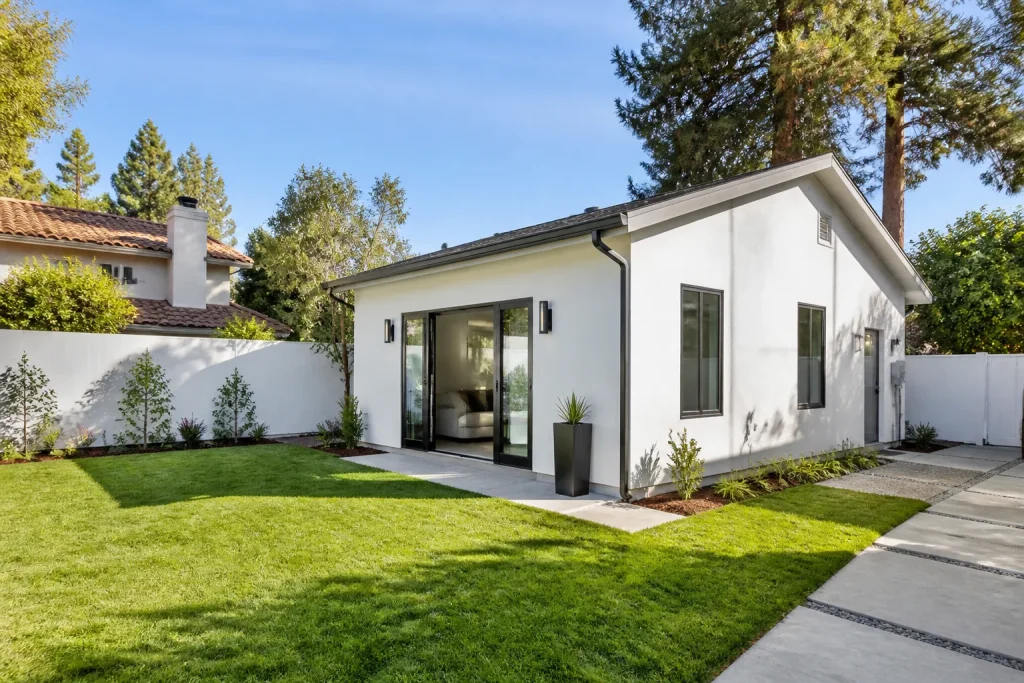
A 500-square-foot accessory dwelling unit in Lake Forest will run most homeowners between $190,000 and $320,000 in 2026, with the typical project landing around $245,000. That range reflects real spreads in method (prefab vs. site-built), site conditions, and finish level. Two neighbors on the same street can end up $120,000 apart for nearly identical square footage, and the gap comes down to about five decisions made before ground breaks.
This breakdown shows where every line item goes, which costs are fixed, and which ones you actually control. If you’d rather skip the research and get a straight answer for your specific lot, call (866) 538-0916 for a free estimate.
The 2026 Lake Forest ADU Cost Stack, Line by Line
Every ADU in Lake Forest carries the same structural cost categories. What changes is how much each category costs you, based on decisions made in the first month. Here is the realistic 2026 line-item breakdown for a 500-square-foot one-bedroom unit in Lake Forest:
- Design and engineering: $12,000 – $22,000. Lake Forest’s Planning Services staff review architectural drawings, structural calculations, and Title 24 energy compliance. Site-built plans cost more because everything must be drawn from scratch; prefab brands like Abodu and Cover bring pre-engineered plans that often clear plan check faster.
- Permit and impact fees: $8,000 – $15,000. This includes school impact fees, sewer/water connection charges, and plan review. These are fixed. You cannot negotiate them.
- Site preparation: $6,000 – $28,000. This is a wildcard item. Lake Forest lots range dramatically in slope. A flat 6,000-square-foot lot in the Foothill Ranch area might need minimal grading. A hillside lot in Portola Hills can require retaining walls, drainage engineering, or soil remediation. We’ve seen site prep swallow $30,000 before any structure appears.
- Foundation: $12,000 – $25,000. Standard slab-on-grade for a flat lot sits at the low end. Raised foundations or reinforced slabs for slope stability push higher. Prefab manufacturers like Mighty Buildings require specific foundation tolerances, which adds precision engineering but reduces on-site concrete labor.
- Structure and shell (materials + labor): $65,000 – $120,000. This is the biggest cost swing. A Tuff Shed conversion starts low but requires substantial framing modification. A Dvele or Cover prefab panelized system arrives factory-built and assembles in weeks. Custom site-built framing with local Lake Forest lumber and labor costs land in the middle-to-high range.
- Mechanical, electrical, and plumbing (MEP) rough-in: $18,000 – $30,000. Trenching for sewer lines from the ADU to the main house connection is a fixed cost. Trenchless options can reduce landscape damage but cost more upfront. Electrical service upgrades (if your panel needs more capacity) can add $3,000 – $6,000 that no builder can avoid.
- Interior finish work (kitchen, bath, flooring, paint): $35,000 – $70,000. This is the most negotiable category. Builder-grade finishes run around $35,000 for a basic kitchenette and 3-piece bath. A full kitchen with custom cabinetry, stone counters, and a high-end bathroom pushes past $60,000. Harvest ADU Builders handles this phase in-house, which removes the coordination markup that comes from hiring a separate kitchen and bathroom contractor.
- Exterior cladding and weatherproofing: $8,000 – $18,000. James Hardie siding and trim cost more than vinyl or basic stucco but hold up better in Lake Forest’s warm, dry summers and the occasional hard rain. Curb appeal matters for resale, and HOA review boards notice.
- Contingency (5 – 8%): $10,000 – $25,000. Every honest builder includes this. Anyone who says they don’t need one is not being straight with you.
Add it up, and you land between $190,000 and $320,000. The spread is real, and it’s controlled by you, not by the builder.
Prefab vs. Site-Built: How Lake Forest Soil and HOA Rules Actually Shift the Math
Most people assume prefab is always cheaper. In Lake Forest in 2026, that’s only true in specific circumstances.
The honest answer: prefab wins when your lot is flat, accessible, and in an HOA that accepts factory-built designs. Site-built wins when your lot is awkward, your access is tight, or you need a custom footprint to fit setbacks and existing trees.
Lake Forest’s terrain drives this more than most people realize. Large portions of the city sit on clay-rich soil that expands and contracts with moisture. That matters less for a lightweight prefab module from Abodu than it does for a heavier site-built structure, because foundation engineering requirements scale with structure weight. A prefab unit on helical piers might avoid expensive over-excavation. A site-built ADU on the same lot might need deep piers and soil testing, adding $8,000 – $15,000 before framing begins.
HOA rules add another layer. Lake Forest has a high concentration of HOAs, particularly in communities like Baker Ranch, Iron Ridge, and the new developments off Bake Parkway. Many HOAs require specific exterior materials, rooflines, and finish colors. A factory-built Dvele unit with custom cladding options can often pass architectural review faster than a basic site-built box that doesn’t match the primary residence. But some HOAs restrict factory-built structures entirely, in which case site-built is your only option. We work with both paths, so the conversation starts with what your HOA will actually approve, not with what we happen to sell.
Our job is to match you to the right method. We build with Abodu, Cover, Dvele, and Mighty Buildings, and we also manage full site-built construction. You choose. Not us.
Fixed vs. Negotiable: Which Line Items Move and Which Don’t
Some ADU costs in Lake Forest are set by agencies and utilities. You pay them. There is no workaround.
Fixed costs:
- City of Lake Forest permit and impact fees
- School district impact fees (Saddleback Valley Unified or Capistrano Unified, depending on your address)
- Sewer and water connection charges
- Utility locates and any required service upgrades
Negotiable or variable costs:
- Finish level (builder-grade vs. custom kitchen and bath)
- Appliance packages (basic vs. mid-range vs. luxury)
- Flooring material (LVP vs. tile vs. engineered hardwood)
- Exterior cladding choice (vinyl vs. stucco vs. James Hardie)
- Site prep scope (retaining walls, tree removal, drainage)
- Contingency percentage (builders control this; it should be transparent)
The most common mistake Lake Forest homeowners make is under-budgeting the finish phase. They allocate appropriately for structure and then run out of room when the kitchen and bath come due. That’s where a builder with in-house bathroom remodeling and kitchen remodeling capability helps: you price the whole project at once, not in piecemeal change orders from separate subcontractors.
What Separate Kitchen and Bath Subcontractors Actually Cost Compared to In-House Remodeling
Let’s put real numbers on coordination costs.
When you hire a general contractor for the ADU shell and then bring in separate kitchen and bathroom contractors for the interior, you accept three hidden costs:
- Scheduling gaps: A shell builder finishes framing, MEP rough-in, and drywall, then leaves. The kitchen contractor can’t start for two weeks. The bath contractor is booked for three. Your ADU sits empty while you pay interest on the construction loan.
- Mismatched scope: The shell builder’s plumber ran supply lines assuming a basic kitchenette layout. Your kitchen contractor wants to move the sink. That’s a change order on the shell side, plus rework, plus delay.
- Re-coordination markup: Someone has to manage two or three separate contracts. If you do it, you lose weekends and work hours. If you hire a project manager, add $5,000 – $8,000.
In practice, splitting the work typically adds $10,000 – $20,000 and six to ten weeks to a Lake Forest ADU project. When we handle the ADU shell, kitchen, and bath under one contract, the plumber and electrician rough in to the finished floor plan from day one. There is no handoff. No gap. No one pointing a finger at the other guy when the island can’t get power because nobody ran a line to it.
We pulled one out of a garage over in the Trabuco Canyon side of Lake Forest last spring where the previous contractor had framed the whole ADU before the kitchen layout was finalized. The homeowner wanted an island with a disposal and dishwasher. The slab was already poured. Cutting it in cost $4,700 and set the job back three weeks. We now require kitchen and bath layouts signed off before foundation pour. It’s the cheapest decision in the entire project.
If you’re deep in planning and the kitchen is starting to feel complicated, that’s a normal point to bring in a pro. Related service pages we point Lake Forest clients toward: ADU Builders in Garden Grove and our Harvest ADU Builders home page, which explains our turnkey scope.
How 2026 Interest Rates and HELOC Structures Change the Real Cost of an ADU
The sticker price on an ADU in Lake Forest is only part of the story. The way you pay for it changes the all-in number.
As of early 2026, HELOC rates for homeowners with strong equity sit between 7.5% and 8.5%. A $245,000 ADU financed entirely through a HELOC at 8% costs roughly $1,850 per month on interest-only payments, or about $2,100 per month on a 20-year amortization. That’s before property taxes, which Lake Forest homeowners should expect to increase by about 1.1% of the assessed ADU value annually.
Here’s the math that makes ADUs work in Lake Forest right now: a one-bedroom ADU rents for $2,200 to $2,800 per month, with units in Saddleback Valley and Portola Hills leasing at the high end due to proximity to employment centers and trail access. That means even at 8% financing, a typical ADU covers its debt service in year one, with modest positive cash flow. The bigger risk isn’t the rate, it’s the budget overrun. A $40,000 overage financed at 8% adds about $300 per month to the payment. That’s the difference between cash flow positive and break-even.
Some Lake Forest homeowners are also using cash-out refinancing rather than HELOCs, especially if their primary mortgage is under 5% and they can’t justify a second lien at a higher rate. The decision depends on your equity position and existing rate, and it’s worth talking to a mortgage broker before you sign a construction contract.
Our advice: lock your construction estimate before you lock your financing. The most expensive ADU is one where the scope drifts after the loan closes. We deliver written line-item pricing with fixed numbers, not ranges, so the number you finance is the number you build for.
The Bottom Line
ADU pricing in Lake Forest in 2026 is a decision stack, not a single number. The method you choose (prefab vs. site-built), the finish level you commit to, and whether you consolidate kitchen and bath work all change the final cost by tens of thousands of dollars. Fixed costs like permits and utility connections are non-negotiable. Everything else is a choice.
If you’re in Lake Forest and want a straight, line-item answer for your specific property, Harvest ADU Builders offers free estimates. We work across prefab manufacturers and full site-built construction, and we finish kitchens and bathrooms in-house so the project has one accountable party. Call (866) 538-0916 to schedule a consultation.
Frequently Asked Questions
A 500-square-foot ADU in Lake Forest typically costs between $190,000 and $320,000, with most projects around $245,000. The range reflects method (prefab vs. site-built), site prep complexity, and finish level. Call (866) 538-0916 for a line-item estimate specific to your lot.
Yes, if your home is part of an HOA. Many Lake Forest communities including Baker Ranch, Iron Ridge, and Portola Hills have architectural review requirements for ADUs, covering materials, rooflines, and finish colors. We help you submit documentation that matches what the HOA actually asks for, which reduces review delays.
It depends on your lot. Flat, accessible lots with HOA approval often favor prefab brands like Abodu or Cover by $15,000 – $40,000. Sloped or tight-access lots frequently favor site-built construction because custom foundations eliminate the cost of crane placement and precision tolerance work. We build both ways and recommend based on your actual conditions, not a sales script.
Not if the scope is locked before ground breaks. The most common cause of cost increases is finalizing kitchen and bath layouts after framing or foundation work is complete. We require finish layouts signed off before foundation pour, so the price you finance is the price you build for.
Written by the team at Harvest ADU Builders, serving Lake Forest since 2012.
Need ADU Help?
Call Harvest ADU Builders — licensed & insured, here with fast after-hours help in Lake Forest.
(866) 538-0916